NVIDIA announced NemoClaw at GTC 2026 — an enterprise AI agent platform that lets mid-market companies customize LLMs without hiring ML researchers. Built on OpenClaw (the viral open-source agent framework Jensen Huang called “the most popular open source project in the history of humanity”), NemoClaw adds five-layer security, automated data curation, and pre-built workflows. Launch partners include Salesforce, Cisco, Google Cloud, Adobe, and CrowdStrike.
The AI Agent Security Crisis Mid-Market Companies Face
Here’s the problem NemoClaw solves: 88% of organizations reported AI agent security incidents in the last year, according to the State of AI Agent Security 2026 Report. In healthcare, that number jumps to 92.7%. Meanwhile, only 14.4% of AI agents make it to production with full security approval.
The gap is simple: mid-market companies need custom AI for compliance and competitive advantage, but fine-tuning LLMs traditionally requires expensive data scientists. Research shows costs start at $47K and climb fast. Most mid-market teams don’t have dedicated ML researchers, locking them out of AI customization entirely. The choice has been: pay for talent you can’t afford, or settle for generic models that leak proprietary data.
How NemoClaw Closes the Gap
NVIDIA’s answer is an enterprise wrapper around OpenClaw with hardware-optimized security and automation. NemoClaw eliminates the ML researcher dependency with three core features: automated data curation pipelines that prepare internal documents for fine-tuning, pre-built domain adaptation workflows for regulated industries, and evaluation tools that measure improvement over base models without manual analysis.
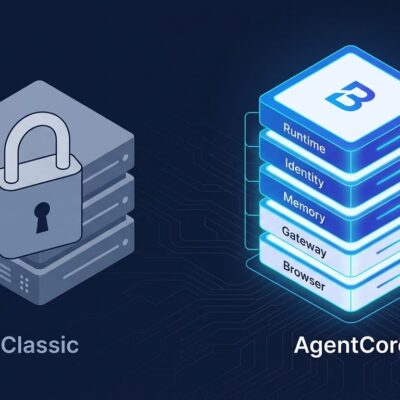
The security architecture stacks five layers between agents and infrastructure: sandboxed execution isolates runtime environments, network egress control limits outbound connections, minimal-privilege access enforces least-privilege permissions, privacy routing keeps sensitive data local, and intent verification validates agent actions before execution. Each layer independently addresses a distinct attack surface in autonomous agent deployments.
NVIDIA kept the agent orchestration layer open-source while offering managed infrastructure, compliance tooling, and support SLAs as a paid enterprise tier. It’s the same model they used with NeMo for LLM training: free core, enterprise extensions for companies that need them.
Technical Architecture: OpenShell and Privacy Routing
Under the hood, NemoClaw runs on NVIDIA’s OpenShell secure runtime, which acts as a policy enforcement broker. An OpenClaw terminal plugin — a process-level interceptor — hooks into subprocess execution paths. A YAML-driven blueprint configures all five security layers at startup. The system evaluates available compute resources, runs NVIDIA Nemotron models locally for privacy and cost efficiency, and routes complex queries to frontier cloud models only when needed.
The privacy router architecture is the clever part. Sensitive data stays on local Nemotron models. Queries requiring higher capability route to cloud endpoints, but only after passing intent verification. For enterprises already running Cisco security infrastructure, NemoClaw integrates directly with Cisco AI Defense for governance and guardrails.
NemoClaw also connects to NVIDIA Inference Microservices (NIM) for containerized, production-optimized model serving. Agents in a NemoClaw deployment call NIM endpoints for inference without managing that layer separately.
Launch Partners and Real-World Use Cases
Salesforce is integrating NemoClaw agents into Agentforce workflows for service, sales, and marketing automation, using Slack as the orchestration layer. Cisco is deploying it for network operations automation, with AI Defense providing policy controls. The full launch partner list spans major enterprise categories: Adobe, Atlassian, Box, CrowdStrike, Red Hat, SAP, ServiceNow, and Siemens.
The target industries are heavily regulated: healthcare, finance, legal. These are sectors where proprietary data training isn’t optional — it’s required for compliance — but hiring ML teams isn’t viable for mid-market budgets.
Why This Matters Now
Agentic AI is the dominant trend in 2026. Venture capitalists poured $242 billion into AI companies in Q1 alone, representing 80% of all global venture funding. Big tech is spending $562 billion on AI infrastructure this year. Developer activity is exploding: 43 million pull requests merged monthly (up 23% year-over-year), 1 billion annual commits (up 25%).
But adoption is outpacing security. While 80.9% of technical teams have moved into active testing or full deployment, only 14.4% go to production with security approval. The GTC 2026 announcement positions NemoClaw as NVIDIA’s answer to this gap, part of a broader $1 trillion revenue opportunity across Blackwell and Vera Rubin platforms through 2027.
Anthropic’s Model Context Protocol crossed 97 million monthly installs in March 2026, with every major AI provider shipping MCP-compatible tooling. The agent ecosystem has matured to the point where standardized orchestration layers — like OpenClaw, and now NemoClaw — are becoming critical infrastructure.
The Democratization Bet
NVIDIA didn’t reinvent the wheel. They took the most popular open-source agent framework, wrapped it in enterprise security, and automated the parts that previously required ML expertise. The pitch is simple: mid-market companies finally get access to custom AI without hiring researchers they can’t afford.
Whether that bet pays off depends on how fast regulated industries adopt and whether the automated workflows actually deliver on the “no ML needed” promise. But the launch partner list and the open-core model suggest NVIDIA is serious about democratizing AI customization beyond enterprise giants. For mid-market companies stuck between AI hype and practical deployment paths, NemoClaw offers a concrete option.