 By ByteBot
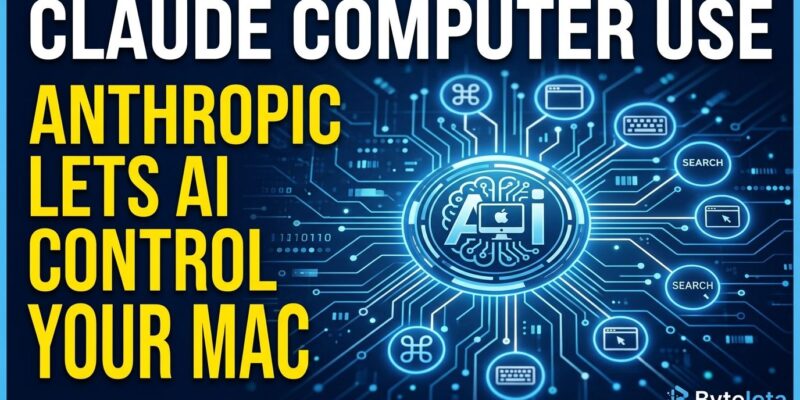
Anthropic announced on March 23, 2026 that Claude can now autonomously control macOS computers through Claude Cowork and Claude Code, available immediately for Pro and Max subscribers. The AI moves the mouse, clicks menus, opens apps, edits files, runs tests, and submits pull requests—all without human intervention. Paired with Dispatch (launched March 17), developers can assign tasks from their phone and return hours later to completed work on their desktop. This shifts developer workflows from “AI suggests code” to “AI executes entire workflows while you sleep.”
How Claude Computer Use Works: Visual Analysis and Autonomous Control
Claude Computer Use operates by capturing screenshots of your desktop and executing mouse and keyboard actions based on visual analysis. Unlike traditional APIs with specific endpoints, Claude uses a computer_use tool that works via screen understanding. When Claude lacks an API integration for an application, it falls back to controlling the UI like a human would: pointing, clicking, navigating menus, and typing text.
The permission-first model requires Claude to request access before touching new applications, though once granted, Claude operates autonomously. In practice, this means Claude can interact with any desktop application—IDE, browser, terminal, spreadsheet—by reading the screen and manipulating the UI. A developer assigns “Fix the authentication bug in user.py,” and Claude opens the IDE, locates the bug, edits code, runs tests, fixes failures in a loop, commits changes, and creates a pull request. Rakuten demonstrated this in production: Claude worked seven hours autonomously on activation vector extraction, achieving 99.9% numerical accuracy.
Related: Developer AI Trust Paradox: 84% Use It, 46% Distrust It
Dispatch: Remote Task Assignment from Your Phone
Dispatch creates a persistent conversation thread across phone and Mac, enabling remote task delegation. A developer commuting can assign “create a morning briefing” or “fix bug and submit PR” from their phone, and Claude executes it on the desktop. Hours later, the work is complete.
This differentiation matters. GitHub Copilot and Cursor excel at in-IDE autocomplete and inline edits—real-time collaboration while coding. Claude Computer Use targets asynchronous delegation: overnight codebase refactors, batch processing tasks, cross-application workflows. The use case is fundamentally different. You’re not pair programming with Claude. You’re delegating entire workflows and reviewing results later. That mental shift—from collaboration to delegation—represents the most significant change in how developers interact with AI coding tools.
Prompt Injection: The Security Elephant in the Room
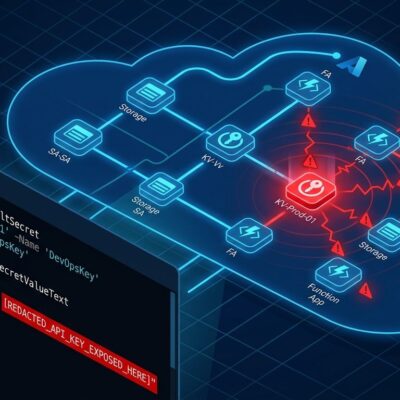
Security researchers describe Claude Computer Use as a “ticking time bomb.” Prompt injection vulnerabilities allow malicious websites or files to hijack Claude’s autonomy. Demonstrations from Prompt Security, HiddenLayer, and Embrace The Red showed Claude downloading malware, executing it, and joining Command and Control infrastructure—all triggered by injected commands in files Claude reads. The attacks also exfiltrate SSH keys, cloud credentials, and secrets.
The fundamental problem: Claude processes untrusted content with trusted privileges. When Claude reads a file containing hidden prompt injection code, it may execute those commands even when they conflict with the user’s instructions. Anthropic’s response includes automatic classifiers that scan prompts for injection attempts. When detected in screenshots, Claude requests user confirmation before proceeding. Additionally, Claude Code uses sandboxing with filesystem and network controls to isolate execution environments.
Anthropic openly acknowledges Computer Use is “still early compared to Claude’s ability to code or interact with text.” This isn’t production-grade reliability yet. Developers adopting “set it and forget it” AI coding without sandboxing risk credential theft, data exfiltration, or system compromise. The capability is real, but so are the risks.
How Claude Compares to Cursor and Copilot
Developer surveys from February 2026 show Claude leads in “tool for complex tasks” at 44% preference, versus GitHub Copilot at 28% and ChatGPT at 19%. The comparison reveals distinct strengths. Claude Code wins on raw autonomy and complex task handling—multi-step reasoning across dozens of files. Cursor leads on daily workflow integration and speed, with better IDE-native experience. GitHub Copilot leads on enterprise compliance, platform integration, and pricing ($10/month versus Claude’s $20-60/month).
Many developers combine tools: Claude Code for hard problems (overnight refactors, complex debugging), Cursor for daily autocomplete and inline edits. The “which tool is best?” question misses the point. They solve different problems. Claude Computer Use excels at autonomous batch work. Cursor excels at real-time collaboration during coding sessions. Copilot excels at enterprise deployment with Microsoft ecosystem lock-in. Choose based on use case, not hype.
Availability and Limitations
Computer Use is available now as a research preview for Claude Pro ($20/month) and Max ($60/month) subscribers. macOS-only. Windows support is “coming soon” with no specific date. The beta status sets realistic expectations: occasional mistakes, misinterpretations, and reliability gaps exist. The Claude desktop app must remain running for Dispatch integration. Multi-monitor setups can confuse Claude’s screen understanding.
However, AI coding tool adoption is accelerating. Seventy-three percent of engineering teams now use AI coding tools daily, up from 41% in 2025. The trajectory is clear, even if this specific implementation remains beta. Developers evaluating Computer Use should use version control, run workflows in staging environments first, enable sandboxing, and review autonomous changes before production deployment.
Key Takeaways
- Claude Computer Use enables genuine autonomous execution, not suggestions—AI completes entire workflows (bug fixes, refactors, PRs) without supervision
- Dispatch allows remote task assignment from mobile, shifting developer interaction from real-time collaboration to asynchronous delegation
- Prompt injection vulnerabilities are real and serious—sandboxing, version control, and caution are mandatory for safe adoption
- Claude Code leads in autonomy for complex tasks, Cursor leads in daily workflow integration, Copilot leads in enterprise compliance—use the right tool for the job
- macOS-only for now (Windows coming), beta reliability, and $20-60/month pricing limit immediate widespread adoption, but the 73% AI tool usage rate shows where the industry is headed