 By ByteBot
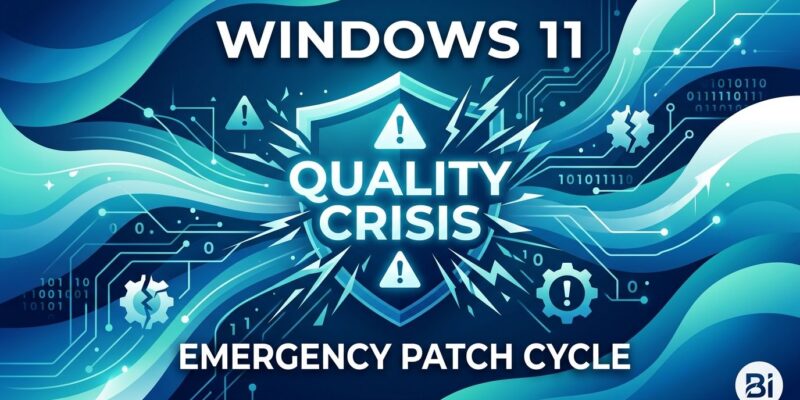
Microsoft released emergency patch KB5085516 on March 21 to fix Microsoft account sign-in failures across Windows 11. The patch fixed problems that Microsoft’s own March 10 update created—breaking Teams, Outlook, OneDrive, and Office authentication. This is the third emergency out-of-band patch in ten weeks. The pattern is unmistakable: Microsoft breaks Windows, issues an emergency fix, then expects gratitude for caring about quality.
When Fixes Need Fixing
The March emergency patch isn’t isolated. January 13 Patch Tuesday broke shutdown for devices with Secure Launch—users stuck in reboot loops. Remote Desktop authentication failed for Azure Virtual Desktop users. Outlook crashed for POP email accounts.
January 17: First emergency patch fixes shutdown and RDP. January 24: Second emergency patch arrives seven days later for OneDrive and Dropbox failures. March 10: Patch Tuesday breaks authentication. Apps report “no internet connection” during Microsoft account sign-in, even with working internet. Microsoft’s March emergency patch arrived March 21 to fix what Microsoft broke eleven days earlier.
Three emergency patches in ten weeks. Each fixed problems Microsoft created. These aren’t edge cases—shutdown, remote access, authentication, cloud storage are core enterprise functionality.
The Gaslighting Playbook
Sam Bent captured the dynamic perfectly in an article that hit number one on Hacker News: “flowers after the beating.” Microsoft breaks your system with updates, then delivers emergency patches claiming they care about your experience.
In late January, Windows president Pavan Davuluri admitted Windows 11 had “gone off track.” He announced Microsoft was entering “swarming mode” to fix reliability issues. The company promised a “quality reset.”
Then emergency patches continued through February and March. The quality reset apparently didn’t reset the part where monthly updates break critical functionality. Microsoft presents these fixes as evidence they’re listening. But users shouldn’t thank Microsoft for not breaking their operating system. Swarming mode isn’t heroic—it’s basic competence. You don’t get credit for bringing flowers when you threw the punch.
The Developer Tax
When authentication breaks, developers lose access to email, Teams, repositories, cloud storage—the entire Microsoft productivity ecosystem. Remote workers get locked out when Remote Desktop fails. Hours of productivity vanish waiting for emergency patches.
IT teams absorb more damage. Weekend emergency deployments become routine. Each out-of-band patch requires urgent validation across hardware configurations. Test the fix, deploy to production, handle support tickets, then repeat when the next emergency patch drops.
Enterprises now extend update deferral periods from seven to thirty days. Some deploy manual installation packages to avoid Windows Update entirely. These workarounds create overhead that shouldn’t exist if updates worked. The pattern erodes trust in Windows as an enterprise platform.
Why This Keeps Happening
Telemetry replaced quality assurance. Telemetry shows what broke after shipping—reactive, not proactive. Repeated emergency patches prove Microsoft isn’t catching failures before release.
Shipping cadence supersedes quality. Patch Tuesday happens monthly regardless of readiness. Users choose between staying vulnerable or risking broken systems. Microsoft bundles security fixes with feature updates, forcing users to take both or neither. A separate security-only channel would let users stay secure without gambling on stability.
The line between Windows Insider beta testing and production has blurred. Production users increasingly experience beta-quality updates.
What Must Change
Separate security updates from feature updates. Give users a security-only channel that delivers critical fixes without bundled features. Let enterprises stay secure without risking new features breaking their environments.
Slow down the update cadence. If this is the result, monthly is too fast. Lengthen the cycle. Give QA time to test across configurations. Better to ship quarterly updates that work than monthly updates that break.
Re-invest in quality assurance testing. Telemetry is valuable but insufficient. Comprehensive pre-release testing catches issues before production. Microsoft can afford proper QA—they’re choosing not to fund it adequately.
Stop marketing basic reliability as innovation. Users don’t need gaslighting. They need an OS that doesn’t break core functionality with every update. Actions matter, words don’t.
The Stakes
Microsoft risks losing enterprise trust in platform reliability. Developers and IT professionals tolerate occasional bugs. Everyone ships bugs. But a pattern where every Patch Tuesday might break shutdown, authentication, or remote access crosses the line from “bugs happen” into “actively hostile user experience.” Three emergency patches in ten weeks suggests that trust is misplaced. Microsoft has a narrow window to prove the quality reset is real and not just more flowers after another beating.